


…at Preshil, we are, one and all, learning and living together – teachers, children and parents
1931
Preshil is founded
In 1931, Margaret J R Lyttle (known to all as Greta) began teaching five young people in the living room of her home at 406 Barkers Road, Hawthorn. From the very beginning, the motto "Courage" pinpointed Greta’s child-centred approach, which quickly gathered momentum, forming the beginnings of what would become Preshil.
Soon after, Greta’s niece, Margaret E Lyttle, affectionately known by students as Magpie, and later Mug, joined the school. She later recalled those early days as joyful, if decidedly unconventional:
“Our dining room was a sub-primary room and an old tram car nearby in the garden was a library for the primary-aged children.”
It was, as a visiting school inspector noted, quite illegal—and a source of concern for the neighbours. Still, he approved the school’s registration, impressed by the strength of its program. Even then, Preshil was attracting educators ahead of their time. In 1933, Frances Derham, the pioneering art educator, joined the school, opening up new ways for young people to express themselves through art.
From a living room classroom to a school that would continue to challenge convention, courage has been part of Preshil’s story from the very start.
Photo credit: Foundation of school; Margaret Jane Ruth (Greta) Lyttle 1875-1944 and her mother Margaret P. McNeilly (1845-1924)

1937
Relocation to Arlington
In 1937, as enrolments continued to grow, the primary school moved to its current home on Barkers Road, now known as the Arlington campus. Margaret J R Lyttle (Greta) and Margaret E Lyttle (Margaret) continued to live at the school, opening their home and the classroom to a number of Jewish refugee children.
Margaret later reflected on those years of teaching and care: “In those days, you were brought up to do things for other people.” By opening its doors to refugee families after the Second World War, Preshil laid the foundations for its long-held commitment to social awareness and justice.
Photo credit: View of Arlington, 395 Barkers Road Kew, from front garden late 1930s with staff and students.

1944
Passing of Margaret J R (Greta) Lyttle
When Margaret J R Lyttle (Greta) died suddenly in 1944, her niece Margaret E Lyttle stepped into leadership with a committed group of educators and a growing community of young people.
Margaret later recalled how Greta’s death left the older students without their teacher just weeks before compulsory formal exams, assessments that would determine where they would continue their senior studies. Undaunted, the students took responsibility for their learning. Working from approved texts, they supported one another and completed the course together.
Every student was accepted into the school of their choice—an extraordinary outcome under any circumstances. It was a moment that reflected what Preshil already stood for: young people trusted with real responsibility, strengthened by community, and supported to rise to the challenge together.
Photo credit: school library at Arlington.

1948
Pioneering Pedagogy
By 1948, the school had grown to 184 students. Reflecting on this period, Margaret E Lyttle described Preshil as a place shaped by trust, continuity and shared purpose. The educators, she said, had worked together for many years, creating “a contented openness about the place”. Classroom doors were always open, and parents were regular, welcome visitors which was very different from the orthodox approach of the time, typically keeping families at arm’s length.
Margaret was clear about what mattered most in learning. Skills, she believed, were essential, but so was dignity. Children wanted to feel “normal”, like the child next door, while also being free to follow their natural curiosity. They were challenged and stimulated by ideas and knowledge, she observed, until adults either organised those instincts out of them, or frightened them into conformity.
At Preshil, educators were there to advise, demonstrate, work alongside and provoke thinking. Young people of all ages moved freely through the school. There were no bells to mark the day—the beginning was gentle, and the end came when energy faded and rest was needed.
Through the 1940s, 50s and 60s, Preshil continued to grow not just in size, but in significance, deepening its commitment to education shaped around young people, relationships and trust.
Photo credit: About 1952. Important Preshil group showing fairly typical group in the garden around Margaret Lyttle.

1973
The Secondary School
In the early 1970s, plans for a Secondary School emerged. By 1973, the vision became a reality. Year 7 students were first based in the Primary School hall, before moving into borrowed spaces at Holy Trinity Church in Kew, and later sharing some classes with Trinity Grammar.
“For a long time, many of us had dreamt of being able to bring the Preshil ethos into our thinking about secondary schooling,” Margaret recalled. “We talked over Sunday barbecues, argued and debated endlessly, and slowly gathered support from educationalists who believed in what we were trying to do—among them John Leppitt, who later became Head of Trinity Grammar, and Henry Schoenheimer, Senior Lecturer in Education at Monash University.”
Photo credit: climbing frame designed and built by students, Blackhall 1980s.

1975
Expansion
In 1975, the grand old mansion Yallambee was purchased, followed by Blackhall in 1978 and its neighbour, Kalimna, in 1990.
Photo credit: Blackhall.

1978
Kindergarten - Year 12
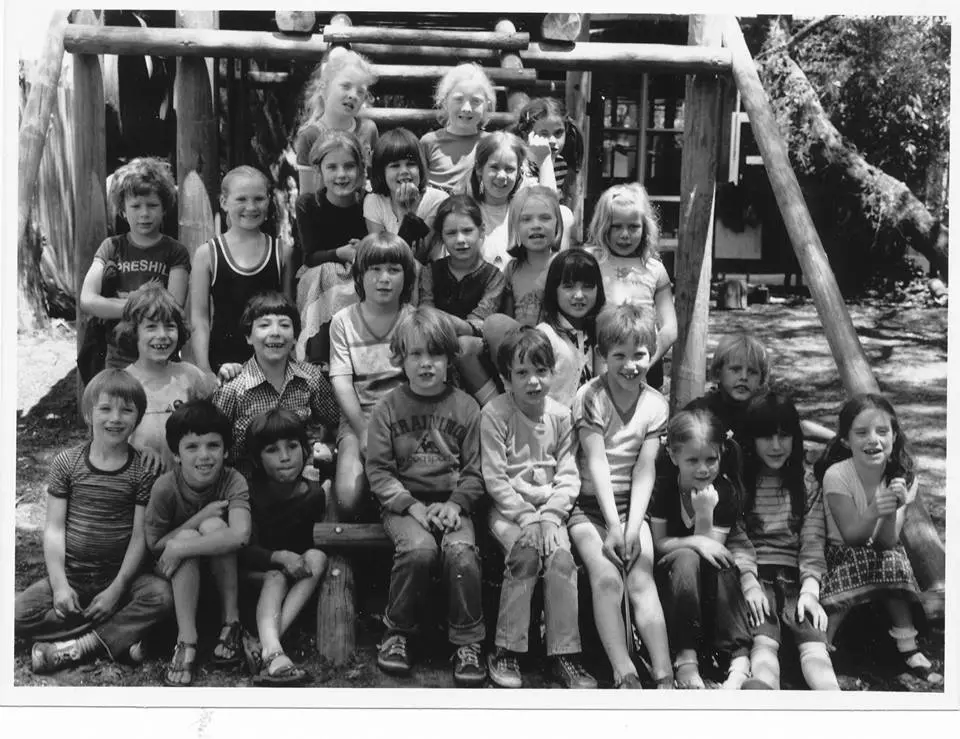
By 1978, the school had extended through to Year 12. From Kindergarten through to VCE (and now International Baccalaureate) students are free to learn and explore who they are becoming with cohesion.
Photo credit: 1982, 6s and 7s.
1989
Order of Australia
In 1989, Margaret Lyttle was appointed a Member of the Order of Australia (AM) in recognition of her services to education.
Photo credit: 1992 Margaret Lyttle and her dog Seamus.

A number of schools are now trying desperately to re-establish some sense of family and community by sending adolescents out for unfortunately brief visits to kindergartens and primary schools. Preshil is attempting to develop, without strain or conscious effort, a kind of family living that keeps the adolescent very naturally in close communion with children of all levels.

A Place For Originals
Preshil’s approach is aligned with influential educational thinkers including Rudolf Steiner, Maria Montessori, John Dewey and Friedrich Froebel. Guided most closely by the vision of our founding Principal, Greta Lyttle, her belief in a school centred on the individual, continues to inform education that breaks the mould at Preshil today.
With these values at our core, Preshil is Australia's oldest progressive school. We didn’t just follow a movement — we helped shape it. Our child-centred, play-based approach has influenced educators and pedagogies locally and internationally. Ideas that began here are now widely recognised in mainstream education with adoption from seminal educationalists Alexander Neill, Dorothy Howard, Jean Stirrat, Oscar Oeser, June Factor, Dorothy Ross, Henry Schoenheimer and Elizabeth Hanby.

Preshil Today
In 2026 we celebrate 95 years of Preshil and still remain true to our two founding principles: engaging with each child as an individual, and building personal responsibility, self-esteem, resilience, initiative, creativity and courage. All a defining thread in the lives of Preshil graduates as they step into the world.
Led by our Principal, Aaron Mackinnon, and supported by the School Board, our educators and the wider Preshil community, we’re investing in our school to deepen the spaces, practices and partnerships that keep our education that breaks the mould bold, relevant and responsive. Our motto of 'Courage' lives on through Preshil graduates as they find their place in the world.
Ready to see real learning in action?
Book a tour of Preshil.

Ready for meaningful education?
Take the next step.